
Cryotherapy
Cryotherapy at BayMed Medical Centre & Skin Cancer Clinic
Cryotherapy is a quick, clinic-based treatment where very cold liquid nitrogen is applied to the skin to freeze and destroy targeted cells. At BayMed Medical Centre & Skin Cancer Clinic in Cheltenham, we use cryotherapy for certain sun-damaged and superficial lesions when it’s a safe and appropriate option, and always as part of an overall skin cancer care plan.
We provide cryotherapy for patients from Cheltenham, Mentone, Highett, Moorabbin, Hampton, Sandringham, Beaumaris and the wider Bayside and south-east Melbourne areas, as well as people who travel from across Victoria for skin checks and treatment at our Cheltenham skin cancer clinic.
What Is Cryotherapy?
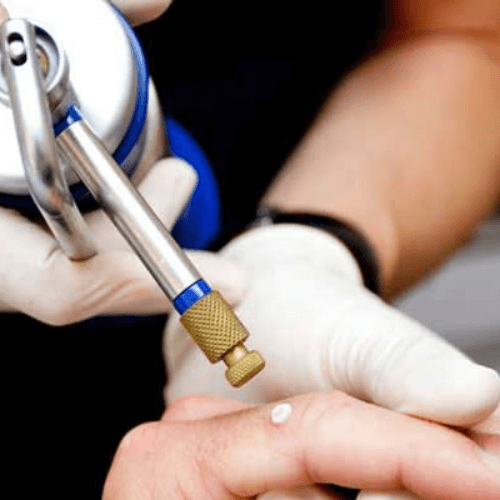
Cryotherapy is a technique that uses liquid nitrogen to rapidly freeze a small area of skin. The extreme cold damages the targeted cells so that the treated tissue forms a blister or scab and then sheds over time, allowing new skin to grow underneath.
Because it is a surface-focused treatment, cryotherapy is best suited to thin, superficial lesions rather than deeper or more complex skin cancers.
When Do We Use Cryotherapy?
At BayMed, cryotherapy may be recommended for:
- Some sun-damaged or precancerous lesions (such as certain solar keratoses/sunspots)
- Selected benign lesions, where freezing is an appropriate option
- Areas where a small, superficial lesion can be treated without the need for stitches
For established skin cancers, surgical removal is usually preferred and cryotherapy is not used as the primary treatment, as it may not adequately treat deeper cancer cells.
Your doctor will examine the lesion, consider your history and discuss whether cryotherapy or another approach (such as biopsy or excision) is the safest choice.
What Happens During a Cryotherapy Treatment?
A typical cryotherapy treatment at BayMed involves:
- Assessment
Your doctor confirms that the lesion is suitable for cryotherapy and explains what to expect, including possible side effects and how the area is likely to heal. - Preparation
The skin around the lesion is cleaned. In some cases, the surrounding skin may be protected to limit the freeze to the area being treated. - Application of Liquid Nitrogen
Liquid nitrogen is applied directly to the lesion using a spray or a cotton-tipped applicator for several seconds. You may feel intense cold, stinging or burning during this part of the treatment, which usually settles quickly once the freezing stops. - Repeat Cycles (if needed)
Some lesions need more than one freeze–thaw cycle in the same visit. Your doctor will decide this based on the type and thickness of the lesion.
The appointment itself is generally short, and most patients can resume normal activities soon afterwards.
What to Expect After Cryotherapy
After cryotherapy, it’s common to experience:
- Redness, stinging or mild discomfort at the treated site
- Swelling or a blister, which may be clear or blood-filled
- A crust or scab, which forms as the area dries and begins to heal
These changes are part of the normal healing process. Most treated areas settle over 2–3 weeks, although some spots—particularly on the legs—may take longer.
Your doctor or nurse will give you specific aftercare instructions, which usually include:
- Keeping the area clean and dry
- Avoiding picking at blisters or scabs
- Protecting the area from the sun while it heals
- Watching for signs of infection (increasing pain, spreading redness, pus) and contacting the clinic if you’re concerned
Possible Risks and Limitations
Cryotherapy is generally considered a low-risk treatment, but like any procedure, it has some potential side effects:
- Temporary pain, redness or swelling
- Blistering and short-term wound discomfort
- Pigment changes (lightening or darkening of the skin at the treated site)
- Small risk of scarring, especially with repeated treatments or on certain areas
Because cryotherapy works on the surface of the skin, thicker or deeper lesions may need repeat treatments or a different approach, such as surgical excision, to ensure complete removal.
Your doctor will discuss these points with you before proceeding so you can weigh the benefits and limitations for your specific lesion.
Is Cryotherapy Right for Me?
Cryotherapy might be considered if:
- Your lesion has been assessed and found suitable for freezing
- The lesion is superficial and does not require excision
- You prefer a quick, no-stitches treatment and understand the trade-offs
It is not suitable for every mole or skin cancer. A proper skin assessment is essential to rule out lesions that need biopsy, excision or another type of treatment instead.
If you’re unsure, your best next step is a skin cancer or mole check appointment, where your doctor can review all options.
Book a Cryotherapy Consultation in Cheltenham
If you’ve been told you have a sunspot or superficial lesion that may be suitable for freezing—or you’d like a skin cancer doctor to review a spot and advise on treatment—book an appointment at BayMed Medical Centre & Skin Cancer Clinic in Cheltenham.
You can book online or call our reception team and request a Skin Cancer Clinic appointment. Your doctor will examine the area, explain whether cryotherapy is appropriate in your case, and outline what to expect before, during and after treatment.