

Electrodesiccation
Electrodesiccation at BayMed Medical Centre & Skin Cancer Clinic
Electrodesiccation is a clinic-based treatment that uses carefully controlled electrical current to destroy targeted skin tissue. At BayMed Medical Centre & Skin Cancer Clinic in Cheltenham, we use electrodesiccation for selected superficial or low-risk lesions when it’s a safe alternative to standard excision, and always as part of an overall skin cancer and sun-damage plan.
We provide electrodesiccation for patients from Cheltenham, Mentone, Highett, Moorabbin, Hampton, Sandringham, Beaumaris and the wider Bayside and south-east Melbourne areas, as well as people who travel from across Victoria for skin checks and treatment at our Cheltenham skin cancer clinic.
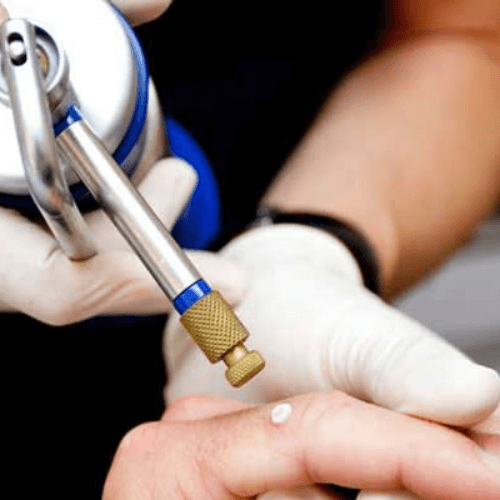
What Is Electrodesiccation?
Your BayMed doctor may consider electrodesiccation if:
- The lesion appears superficial and low risk on examination and, where needed, biopsy
- A non-surgical approach is reasonable and consistent with current guidelines for that lesion type
- You prefer to avoid standard excision and stitches, and this aligns with safe medical practice
- The site is suitable for this type of treatment and follow-up
It is not used for all skin cancers. Deeper, thicker or higher-risk lesions are more likely to be treated with excision or other specialist procedures.
What Happens During an Electrodesiccation Procedure?
Most electrodesiccation procedures at BayMed are done in our treatment room under local anaesthetic.
A typical visit includes:
- Assessment and Explanation
Your doctor reviews the lesion, any biopsy results and your medical history. They confirm that electrodesiccation is a suitable option and explain what to expect, including healing, possible scarring and alternatives. - Local Anaesthetic
The area around the lesion is cleaned and numbed with local anaesthetic. You may feel a brief sting, followed by pressure but no sharp pain. - Curettage (if used)
In some cases, the lesion is gently scraped with a curette to remove soft tissue and define the treatment area. - Electrodesiccation
A fine-tipped instrument delivers controlled electrical current to the lesion, drying and destroying targeted tissue. This may be repeated in one or more passes, depending on the thickness and behaviour of the lesion. - Dressing and Aftercare Advice
The area is covered with a dressing. You’ll receive clear instructions on how to look after the wound, what is normal during healing and when to call the clinic.
The procedure is usually short, and most people can return to light daily activities soon afterwards.
What to Expect After Electrodesiccation
Following electrodesiccation, it’s common to notice:
- Redness and mild swelling around the treated area
- A crust or scab that forms as the tissue dries and begins to heal
- Mild tenderness or discomfort, which can often be managed with simple pain relief if needed
Your aftercare plan may include:
- Keeping the area clean and dry for a period
- Changing dressings as advised
- Avoiding picking at scabs or crusts
- Protecting the area from sun exposure while it heals
Healing time varies with the site and size of the lesion but often takes a few weeks. Colour and texture can continue to settle over several months.
Benefits and Limitations
Potential benefits of electrodesiccation:
- No stitches in many cases
- Short, clinic-based treatment
- Useful for selected superficial lesions
- Can be an option where a surface-focused treatment is acceptable
Limitations:
- Not suitable for all skin cancers—especially thicker or aggressive lesions
- May result in a lighter or darker patch of skin compared with surrounding areas
- In some cases, further treatment (including excision) may still be required if the lesion does not respond as expected or recurs
Your BayMed doctor will be straightforward about when electrodesiccation is a sensible option—and when standard surgery or another approach is safer.
Do I Need a Biopsy Before Electrodesiccation?
In many cases, particularly when there is any concern about skin cancer, your doctor may recommend a biopsy before treatment to confirm the diagnosis and depth of the lesion.
This helps to:
- Ensure the lesion is appropriate for non-surgical management
- Guide whether electrodesiccation, excision or another option is best
- Reduce the risk of under-treating a lesion that needs a more definitive approach
Your doctor will explain when a biopsy is strongly advised and what it would change in your treatment plan.
How Does Electrodesiccation Fit into My Overall Skin Cancer Care?
Electrodesiccation is just one tool in our skin cancer treatment toolkit at BayMed. It sits alongside:
- Skin checks and screening
- Digital dermoscopy and mole mapping
- Total body photography and surveillance
- Biopsies, excisions and grafts
- Cryotherapy and other non-surgical options
Together, these approaches help us tailor care to your individual risk, lesion type and preferences, rather than relying on a single treatment for every situation.
Book an Electrodesiccation Consultation in Cheltenham
If you’ve been told you have a superficial lesion or sun-damaged area that may be suitable for electrodesiccation—or you’d like a skin cancer doctor to review a spot and talk through your options—you can book a Skin Cancer Clinic appointment at BayMed Medical Centre & Skin Cancer Clinic in Cheltenham.
Bookings can be made online or by calling our reception team. Please mention that you’d like to discuss electrodesiccation or other non-surgical skin treatments, so we can allocate enough time to examine the lesion, explain the choices and plan the most appropriate treatment for you.