

Biopsy
Skin Biopsy at BayMed Medical Centre & Skin Cancer Clinic
A skin biopsy is often the clearest way to find out whether a mole, spot or patch of skin is benign, precancerous or cancerous. At BayMed Medical Centre & Skin Cancer Clinic in Cheltenham, our doctors perform skin biopsies under local anaesthetic as part of a careful approach to diagnosing and managing skin cancers and other skin conditions.
We perform skin biopsies for patients from Cheltenham, Mentone, Highett, Moorabbin, Hampton, Sandringham, Beaumaris and the wider Bayside and south-east Melbourne areas, as well as patients who travel from across Victoria for skin cancer checks and treatment in our Cheltenham clinic.
What Is a Skin Biopsy?
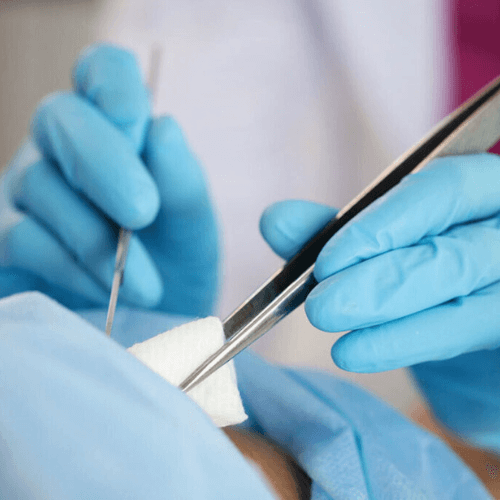
A skin biopsy involves removing a small sample of skin from an area of concern so it can be examined by a specialist pathologist under a microscope.
The biopsy:
- Confirms whether a lesion is benign, precancerous or cancerous
- Helps identify the type of skin cancer (if present)
- Guides the next step in your treatment plan, such as wider excision, surveillance or no further action
In many cases, the biopsy is the key step that turns uncertainty into a clear diagnosis.
When Might Your Doctor Recommend a Biopsy?
Your BayMed doctor may suggest a biopsy if a lesion:
- Has changed in size, shape, colour or thickness
- Has features concerning for melanoma or other skin cancers
- Is not healing, or repeatedly bleeds, crusts or ulcerates
- Has an unusual appearance that cannot be confidently labelled benign on examination alone
Sometimes a biopsy is also used to diagnose non-cancerous skin conditions, such as rashes or inflammatory skin diseases, when the clinical picture is unclear.
Types of Skin Biopsies
The type of biopsy depends on the size, depth and location of the lesion, and what your doctor is looking to confirm.
Common approaches include:
Shave Biopsy
A thin layer of the lesion is shaved off the surface of the skin. This can be useful for some raised or superficial lesions where deeper sampling is not required.
Punch Biopsy
A small, circular “core” of skin is removed using a punch tool, capturing the full thickness of the skin in that area. Punch biopsies are often used for rashes, flat lesions or when a small but deeper sample is needed.
Excisional or Incisional Biopsy
- Excisional biopsy – the entire lesion is removed, often with a narrow margin of normal skin.
- Incisional biopsy – only part of a larger lesion is sampled.
Excisional biopsies are commonly used when a melanoma or other skin cancer is strongly suspected and removal of the whole lesion is appropriate.
Your doctor will explain which method is recommended in your situation and why.
What Happens Before a Biopsy?
Before the procedure, your doctor will:
- Review your medical history, allergies and medications (including blood thinners)
- Examine the lesion and discuss why a biopsy is being advised
- Explain the procedure, possible risks and alternatives
- Answer any questions and obtain your consent
In most cases, you can eat and drink normally and drive yourself home afterwards, but you’ll be told if there are any specific instructions for your case.
What to Expect During the Biopsy
Most skin biopsies at BayMed are done in our treatment room under local anaesthetic and take only a short time.
A typical biopsy visit includes:
- Preparation
The skin around the lesion is cleaned and marked. Local anaesthetic is injected to numb the area—you may feel a brief sting, then pressure but no sharp pain. - Removal of the Sample
Your doctor performs the chosen type of biopsy (shave, punch or excisional). You may feel movement or pressure, but the area should be numb. - Closing the Wound
Smaller biopsies may need only a simple dressing.
Others may require a few stitches to close the site. - Dressing and Advice
A dressing is applied, and you will be given written and verbal instructions on how to look after the wound at home.
After the Biopsy: Healing and Care
After a skin biopsy, it is common to experience:
- Mild tenderness, bruising or swelling around the area
- A small amount of blood on the dressing initially
- Itching as the wound starts to heal
Your aftercare instructions may include:
- Keeping the area clean and dry for a set period
- Changing the dressing as advised
- Avoiding heavy exercise or stretching that might pull on the wound
- Watching for signs of infection, such as increasing redness, pain, warmth or discharge
If stitches are used, you’ll be asked to return to have them removed at a suitable time, depending on the location (for example, face vs trunk vs leg).
Pathology Results and Next Steps
The biopsy sample is sent to a pathology laboratory for detailed analysis. When the report returns, your doctor will:
- Confirm what the lesion is (benign, precancerous or cancerous)
- Explain whether any further treatment is needed—for example, a wider excision to ensure clear margins
- Discuss whether your result changes your overall skin cancer risk profile
- Recommend how often you should have future skin checks
If the biopsy shows a skin cancer that has already been completely removed, your doctor will talk through follow-up, scar care and ongoing surveillance. If further surgery or another treatment is required, this will be clearly explained and arranged.
Risks and Limitations of a Skin Biopsy
Skin biopsies are generally low-risk procedures, but possible issues include:
- Bleeding or bruising
- Infection at the biopsy site
- Temporary or permanent scarring
- Numbness or altered sensation near the scar
Very occasionally, a biopsy may not capture the most abnormal part of a lesion, and a further procedure may be needed to clarify the diagnosis. Your doctor will let you know if this is a possibility in your case.
Booking a Skin Biopsy Consultation in Cheltenham
If you have a mole or spot that has changed—or your doctor has recommended a biopsy as part of a skin cancer check—you can book a Skin Cancer Clinic appointment at BayMed Medical Centre & Skin Cancer Clinic in Cheltenham.
Appointments can be made online or by calling our reception team. Please mention that you’ve been advised you may need a skin biopsy, so we can allow enough time to discuss the procedure, perform the biopsy if appropriate, and talk through what to expect next.