
Non-surgical Treatments (Cryotherapy, Electrodesiccation)
Non-surgical Skin Cancer Treatments at BayMed Medical Centre & Skin Cancer Clinic
Not every sun-damaged or suspicious spot needs stitches or major surgery. At BayMed Medical Centre & Skin Cancer Clinic in Cheltenham, we offer selected non-surgical treatments—including cryotherapy and electrodesiccation—for suitable superficial lesions, as part of an overall skin cancer and sun-damage management plan.
We provide these treatments for patients from Cheltenham, Mentone, Highett, Moorabbin, Hampton, Sandringham, Beaumaris and the wider Bayside and south-east Melbourne areas, as well as people who travel from across Victoria for skin checks and treatment at our Cheltenham clinic.
What Do We Mean by “Non-surgical” Treatments?
In this context, “non-surgical” refers to clinic-based, minimally invasive procedures that don’t involve traditional excisional surgery with stitches. At BayMed, this mainly includes:
- Cryotherapy – freezing a lesion with liquid nitrogen
- Electrodesiccation – using carefully controlled electrical current to destroy targeted tissue
These options are generally reserved for superficial, well-selected lesions once your doctor is confident it’s safe to treat them this way, rather than with standard surgery.
Cryotherapy
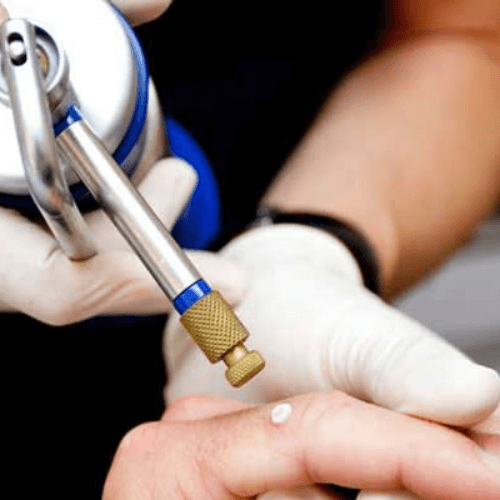
Cryotherapy uses liquid nitrogen to quickly freeze and destroy abnormal or sun-damaged cells on the skin’s surface.
At BayMed, cryotherapy may be used for:
- Certain sunspots/solar keratoses
- Some superficial precancerous lesions, where appropriate
- Selected benign lesions where freezing is a practical option
During treatment, liquid nitrogen is applied to the area for a few seconds. You may feel intense cold or stinging, followed by redness, blistering or a scab as the area heals over the following days to weeks.
We’ve already created a dedicated Cryotherapy page for you, so on this non-surgical treatments page you can:
- Link to it internally (e.g. “Learn more about cryotherapy at BayMed”)
- Keep this section high-level and patient-friendly, as above
Electrodesiccation
Your BayMed skin cancer doctor may discuss cryotherapy or electrodesiccation if:
- The lesion appears superficial and low risk
- It is in an area where a small, surface-focused treatment is appropriate
- A biopsy and/or dermoscopic assessment supports a non-surgical approach
- You prefer to avoid stitches where it’s medically sensible to do so
For many confirmed skin cancers, especially those that are thicker or higher risk, excision remains the main treatment. Non-surgical options are not a replacement for surgery in those cases.
What Happens During a Non-surgical Treatment Visit?
A typical non-surgical treatment visit at BayMed involves:
- Assessment and Explanation
Your doctor reviews the lesion, confirms that a non-surgical option is suitable and explains what to expect, including healing time and possible side effects. - Treatment in the Clinic Room
With cryotherapy, liquid nitrogen is applied to the lesion via a spray or cotton-tipped applicator.
With electrodesiccation, the area is usually numbed with local anaesthetic before a fine-tipped instrument delivers controlled electrical current to the lesion. - Dressing and Aftercare Advice
A dressing may be applied, and you’ll be given clear instructions on how to care for the area at home—what is normal, what to avoid and when to contact the clinic. - Follow-up Plan
Your doctor will tell you whether to book a review, whether further treatments may be needed, and how this fits into your broader skin cancer surveillance plan.
Most people can resume light daily activities soon after these treatments, with some care taken to protect the treated area while it heals.
Benefits and Limitations of Non-surgical Treatments
Potential benefits:
- No stitches in many cases
- Short in-clinic procedure time
- Useful for certain superficial lesions
- Can be a good option where cosmetic or practical considerations favour a surface treatment
Limitations:
- Not suitable for all skin cancers—especially deeper, thicker or aggressive lesions
- May leave areas of lighter or darker skin compared with surrounding skin
In some cases, repeat treatments or further surgery may still be needed if the lesion does not respond as expected
Your doctor will be upfront about what non-surgical treatment can and can’t achieve, and when standard surgery or referral is a better option.
Is a Biopsy Needed Before Non-surgical Treatment?
In many cases, especially for lesions where skin cancer is a possibility, a biopsy is recommended before non-surgical treatment to clarify the diagnosis and depth.
Your BayMed doctor will explain:
- Whether a biopsy is advisable in your case
- The risks of treating without biopsy
- How biopsy results change the treatment plan (for example, moving to excision instead of cryotherapy)
This step helps ensure you receive an appropriate level of treatment for the type of lesion you have.
Book a Non-surgical Treatment Consultation in Cheltenham
If you’ve been told you have a sun-damaged area, superficial lesion or spot that may be treatable without stitches—or you’d like a skin cancer doctor to review a lesion and discuss options—you can book a Skin Cancer Clinic appointment at BayMed Medical Centre & Skin Cancer Clinic in Cheltenham.
Bookings can be made online or by calling our reception team. Please mention that you’d like to discuss non-surgical skin treatments such as cryotherapy or electrodesiccation, so we can allocate enough time to examine the lesion, talk through the choices and plan the most suitable treatment for you.